climate catastrof**k
-
Posted on 09:18:43 - 12/08/23 (2 years ago)Post link copied to clipboard Copy post linkEnergy weapon in Hawaii? Who posts this shit? Too many people died in that fire, show some respect.
If this is just some made up bullshit, then you are very wrong to even suggest it. If it is true then show some hard, factual proof and tell us who is responsible because at the moment it stinks like a big rotten turd and shame on you if you think it's a good way to argue your position.
-
-
Posted on 10:52:58 - 12/08/23 (2 years ago)Post link copied to clipboard Copy post linkyall in 1st world country complain bout climate change.. how about you start advocating that to poor countries and poor people who dont give a shit whats gonna happen.
-
-
Posted on 11:22:58 - 12/08/23 (2 years ago)Post link copied to clipboard Copy post linkTo be fair, you’re not wrong. Poorer countries do pollute, however not to the same degree first world countries do due to consumerism and outsourcing a lot of manufacturing overseas.
Also, generally, poorer countries are poorer because colonialism has taken their resource wealth and exploited their Labour capital. So realistically it should be a global effort to help those countries reduce their carbon output, after all we’re all on the same planet so what they do effects us all, at least when it comes to the environment. -
-
Posted on 15:52:23 - 12/08/23 (2 years ago)Post link copied to clipboard Copy post linkever heard of Global Greening?Last edited by vengeance_torn on 17:49:14 - 12/08/23 (2 years ago)
WE - DON'T SELL SHIT - AROUND HERE!
The TORNCITY What They Don't Want You To Know: Never Believe The Lies Until You Seen It Yourself! Report all 'disturbances' as they come! Nothing beats a Nice Cold Beer! You'll Miss It When They Take It From You Kid Huh! Free My Friendo Peter the Apostle TODAY!

-
-
Posted on 16:32:18 - 12/08/23 (2 years ago)Post link copied to clipboard Copy post linkHeheh, you haven't heard that one? My dad has rolled it out a few times... always assumed it was some early 20th century aphorism but apparently it's even older than that
-
-
Posted on 16:58:48 - 12/08/23 (2 years ago)Post link copied to clipboard Copy post linkJust an old talking point about how people believe that you should become more conservative as you grow older (which isn't true).

-
-
Posted on 17:01:01 - 12/08/23 (2 years ago)Post link copied to clipboard Copy post linkHe's not saying there was an energy weapon. He's pointing out the ridiculousness claims some people are making.
-
-
-
Posted on 20:52:49 - 12/08/23 (2 years ago)Post link copied to clipboard Copy post linkI sneezed while laughing at this and bit my tongue.
Vegans:

-
-
Posted on 02:02:00 - 13/08/23 (2 years ago)Post link copied to clipboard Copy post link
7 more heat-related deaths confirmed in Arizona, California
A total of 18 people have died from heat in one Arizona county this summer.
A swath of the United States is facing a dangerous combination of extreme heat and wildfire smoke this week.
More than 85 million Americans across 15 states -- from California to Florida -- are under heat alerts for Wednesday, according to the National Weather Service.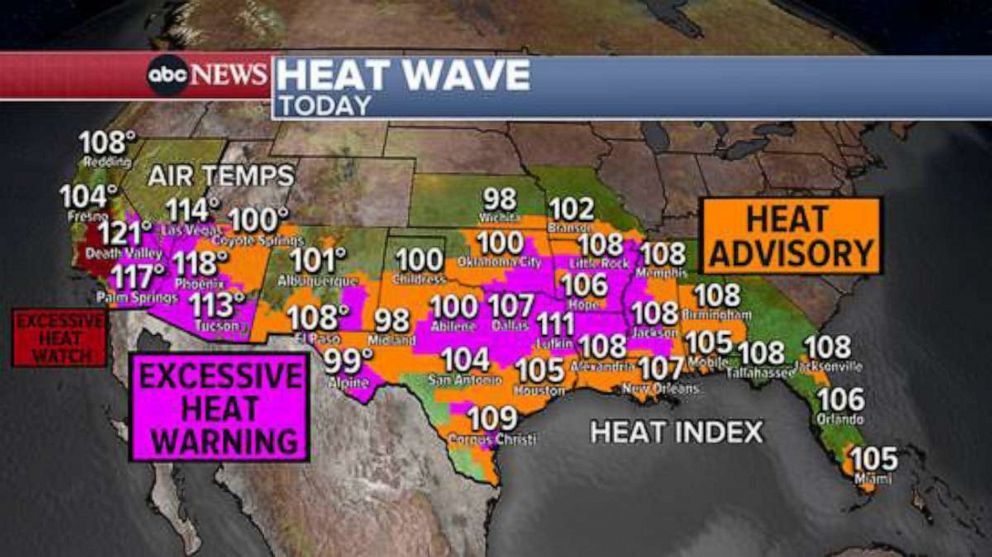
The National Weather Service issued heat alerts across 15 states ABC News
The consecutive days of record-high temperatures combined with high overnight temperatures makes this heat wave especially threatening, as the longer it lasts, the more dangerous it becomes.
Six more heat-related deaths were confirmed in Maricopa County, Arizona, on Wednesday, the Maricopa County Department of Public Health announced.
A total of 18 people in Maricopa County, which includes the cities of Phoenix, Mesa and Scottsdale, have died this summer of heat complications, and another 69 deaths are under investigation, health officials said.
A 71-year-old man also died at Death Valley National Park in California on Tuesday as temperatures soared to 121 degrees Fahrenheit, according to the National Park Service. The man collapsed outside the bathroom at Golden Canyon and had likely been hiking the popular trail.
The man was wearing a sun hat and hiking clothes, and carried a backpack when he collapsed, according to the NPS.
A helicopter was not able to respond to the scene due to the heat, park officials said. Park rangers performed CPR and used an automated external defibrillator but were not able to revive him.
While a cause of death has not been determined, park officials "suspect heat was a factor," according to the NPS.
A forecast of the high temperatures in Fresno, California
A number of cities are shattering records amid scorching temperatures.
Tuesday marked the record-breaking 19th straight day the heat index value was at or above 110 degrees Fahrenheit in Phoenix, Arizona, with no end in sight.
Overnight temperatures there also haven't dropped below 90 degrees for a record 9 days in a row.
A forecast of the heat index values for Dallas, Texas; Corpus...
In Miami, Florida, the heat index value has been at or above 100 degrees for a record 38 consecutive days.
El Paso, Texas, has counted a record 33 straight days with the heat index value at or above 100 degrees.
Las Cruces, New Mexico, has gone a record 17 days in a row with the heat index value at or above 100 degrees.
Tucson, Arizona, broke its all-time record warm low temperature at 86 degrees on Wednesday morning.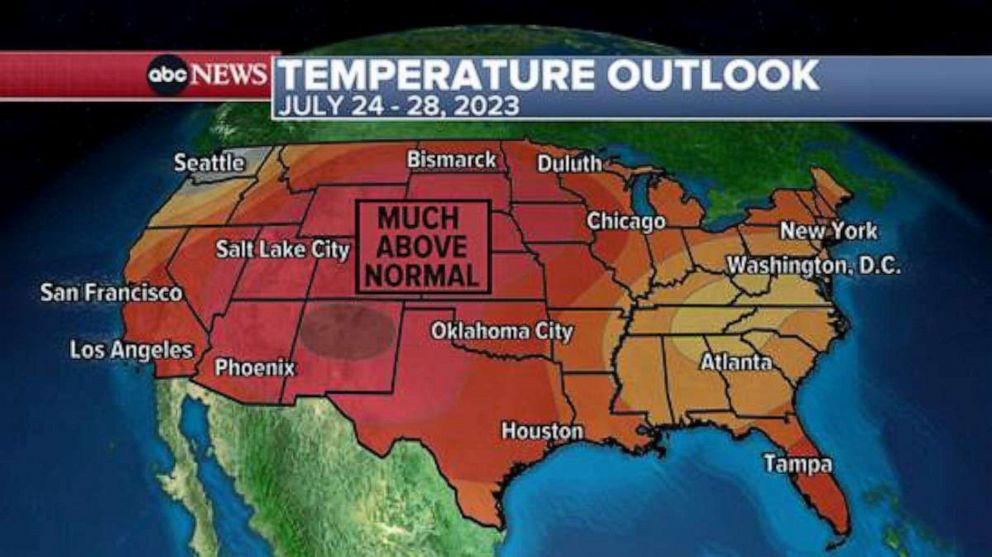 The latest forecast shows above average temperatures.
The heat wave isn't expected to end anytime soon.
The latest forecast shows above-average temperatures for the rest of July, particularly in the West and the South.
The last 16 days on Earth have been the hottest on record and the planet's surface temperature is on track to break a record set only a couple of weeks ago.
A map shows the projected impact of smoke from wildfires
Meanwhile, several states in the East are under air quality alerts due to smoke from raging wildfires in neighboring Canada.
The smoke was expected to lighten up on Wednesday as the weather front moves through the region.
California is now battling its own wildfires, with heavy smoke drifting over cities such as Fresno and areas up the northern coast.
Dangerous smoke was expected to spread into Medford, Oregon, on Thursday. A map shows the projected impact of smoke from wildfires
Severe storms are possible Wednesday night and Thursday across the Plains from the Texas and Oklahoma panhandles up through Minneapolis, with damaging winds, hail and possible brief tornadoes.
Multiple counties in far western Kentucky were under flash flood emergencies on Wednesday afternoon.
The area is already experiencing widespread flooding due to significant rainfall Wednesday morning -- up to 10 inches and more in some spots, according to the National Weather Service.
Kentucky Gov. Andy Beshear declared a state of emergency Wednesday afternoon, describing "significant damage" in the town of Mayfield due to heavy rainfall.
"So, the first thing for everyone is be safe and make sure your family is safe," Beshear said in a statement.
"Remember, we can replace stuff and we can rebuild homes. We don't want to lose any lives."
Flooding has also been reported across middle Tennessee as the heavy rain moved through on Wednesday – up to 6 inches in some regions. A flood watch will continue in the region today, which includes Nashville.
The influx of rain is being fueled by the abundant heat, moisture and instability in the atmosphere.
Another small area in coastal North Carolina and Virginia, including Virginia Beach and the Outer Banks, could also see severe storms on Wednesday. A tornado watch has been issued in those areas until 7 p.m.
A tornado has been confirmed to strike Halifax County, North Carolina, on Wednesday afternoon. Another tornado, an EF3, struck north of Rocky Mount, North Carolina, according to the National Weather Service's Raleigh office.
The Pfizer facility in Rocky Mount sustained damage, the pharmaceutical company said in a statement. Employees who were in the building were able to evacuate and are "safe and accounted for."
"We are assessing the situation to determine the impact on production," Pfizer said in a statement. "Our thoughts are with our colleagues, our patients, and the community as we rebuild from this weather incident." -
-
Posted on 07:53:01 - 14/08/23 (2 years ago)Post link copied to clipboard Copy post link
Patrick Garvey loved living in the Florida Keys.
Famed as an oasis for quirky folks, the idyllic limestone island chain offered Garvey, who’d journeyed down from the Canadian Maritimes, the kind of off-the-beaten-track life he craved.
On isolated Big Pine Key, he found his passion project, cultivating a rare tropical fruit grove.
He had a wife, twin daughters, and a pet pooch.
Life was good—until September of 2017, when Hurricane Irma made a turn for the Keys.
With his family already out of harm’s way, he stayed put and spent harrowing hours in a nearby school shelter with hundreds of other evacuees.
Emerging hours later, Garvey picked his way across the pulverized island.
He found his grove with only one solitary tree.Hurricanes expose the perils of living on the front porch of the climate crisis.
In the coming decades, severe storms, floods, fires, heat waves, and drought will force millions of Americans to search for new homes.
In The Great Displacement, journalist Jake Bittle delivers powerful stories of seven scarred communities and their people, compelled to cope with loss, unresponsive bureaucracies, and the prospect of future threats.
Journeying across the South to the Southwest and into California, he digs deep into the personal experiences of these first climate crisis migrants and delivers a potent appraisal of the myriad forces already uprooting and complicating life for Americans as they scatter across the country.
Given the sweep of the continental United States, migration is a portal to some of the most fraught chapters in the country’s history.
Bittle, a staff writer for Grist, an online climate and justice magazine, opens with a nod to the early-to-mid-20th-century Great Migration, which propelled some six million terrorized Blacks out of the South.
On its surface, by contrast, the climate crisis is an equal-opportunity, slow-motion catastrophe in progress, one that affects everyone regardless of melanin content or whether you are penniless, bank in Bitcoins, or stuff dead presidents in a wallet.
Bittle underlines this egalitarian starting point, but proceeds by reporting how it’s overlaid on the nation’s historic and enduring fault lines of race, ethnicity, and class that structure where Americans live today and where they end up in the aftermath of a cataclysm.
Black communities have long been sited in perilous areas.
One place Bittle profiles is Lincoln City, a Black neighborhood in Kinston, North Carolina.
Settled after the Civil War, the community’s formerly enslaved people made their homes on a swampy riverbank that whites knew to be susceptible to flooding.
(In 1981, the Army Corps of Engineers completed one dam to protect Raleigh and decided against a second to protect areas like Kinston to the south.)
Most of their descendants refused buyouts after Hurricane Fran’s flooding in 1996.
Three years later, when Hurricane Floyd decimated Lincoln City, county officials did not have to ask; residents came to them.
A perverse kind of managed retreat then dispersed the mostly senior residents who did not have flood insurance elsewhere throughout the region and the country.
But the white residents of the state’s Outer Banks, a series of barrier islands, have been the repeated beneficiaries of beach nourishment and other projects to protect their homes and other properties.Bittle is at his finest as a chronicler of the loss of place and the sense of belonging for victims of natural disasters.
A superb storyteller, Bittle is at his finest as a chronicler of the loss of place and the sense of belonging, and the frustration that financial constraints pose for the victims of natural disasters.
These elements combined to convince some survivors to stay in proven dangerous zones like Coffey Park, a Santa Rosa, California, neighborhood ravaged by the 2017 Tubbs Fire.
He spotlights the particular socioeconomic and demographic markers that determined whether people moved to someplace safer and affordable or stayed in imperiled places despite the risks and costs.
After the embers came over hills and the highway-cum-firebreak they’d thought would protect their community, Kevin Tran and his family escaped in two cars.
His father took their dog in one.
Tran had his mother ride with him in a second, fearing that she might double back to retrieve photo albums.
They made it out with just minutes to spare before the fire reduced their neighborhood to ashes.
Their insurance payout came nowhere near to covering what it would cost to live anywhere else in metro San Francisco.
They opted not to move out of their diverse, congenial middle-class community, a rarity in that part of California, that they all loved.
José Guzman, his wife, and four children took a roundabout route back to Coffey Park.
Following the fire, they initially moved clear across the country to Louisville, Kentucky, for several years.
The lower cost of living and fewer climate hazards there, however, proved no match for the emotional tug of California life, even though that meant returning to rebuild on a burned-out plot of land with an outstanding mortgage.
A wealthy suburban couple, Vicki and Mark Carrino, stayed on, too.
They returned to Fountaingrove outside Santa Rosa. Despite the near certainty that fire still loomed in their future, the Carrinos were so bonded to their former homestead that they built an almost exact (and expensive) replica of their former home with their insurance proceeds and savings.
Why? Sociologists Anna Rhodes and Max Besbris have explored the concept of a “forever home” in their study of a Houston suburb flooded by Hurricane Harvey.
They found that the appeal of a forever home—a dwelling for a lifetime, surrounded by family, friends, and strong community ties—underpins longtime residents’ decisions to remain, rebuild, and defy the obvious dangers.
Living in perilous areas means that public officials must incorporate “resilience” into community planning—that is, managing and hardening vulnerable places against future disasters.
But is resilience just another word for nothing left to lose?
Norfolk, Virginia, increasingly prey to sea level rise, has embarked on fortifying the Chesterfield Heights neighborhood by raising streets, improving drainage, and building berms.
But Bittle deems the case for this multimillion-dollar project to be disingenuous, a slender benefit that only staves off the inevitable.
Even as the coastal real estate markets already display hints of the bubble that preceded the Great Recession, he notes that at some point in the not-too-distant future, even before chronic flooding overwhelms some coastal neighborhoods in Norfolk and beyond, that market is likely to crater.
What stays true is them that have gets.
When the town of Paradise, California, burned to the ground in 2018, one group of migrants found an agreeable place to settle down in the Boise, Idaho, suburb of Nampa.
Some of them had been couch-surfing or struggling with rent payments.
But one enterprising real estate agent, enchanted with her new home, convinced some of her fellow residents to follow her lead and settle in Idaho.
Thanks to her ministrations, they found an appealing place with less climate risk and with homes they could afford.
Left to fend for themselves, hundreds of other Paradise evacuees fell into homelessness, consigned to a tent city in a Walmart parking lot ten minutes away from their incinerated town.
If Bittle’s sojourn through threatened places lands on a discordant coda, it is because he provides few solid answers to his question of where the climate-displaced will go.
Instead, Bittle proffers plausible scenarios with plenty of caveats.
While a few small communities have opted for “managed retreat” (planned moves of people and assets out of danger zones), he argues that it will not work as well for larger places.
Bittle cites Boston, New York, Miami, and Charleston, South Carolina, as especially endangered, and notes that the cost of buying out homes and moving other assets away from tide-impacted shorelines almost anywhere along the East Coast will be difficult and pricey.
To be sure, forward-thinkers in Charleston are taking small but significant steps to move people out of threatened areas.
Hurricane Sandy did force New York to cede sections of Staten Island to the water.
But developers still hold sway.
The rebuilt homes in the post-Sandy Rockaways now have million-dollar-plus price tags.
After natural disasters that render areas or regions uninhabitable, Bittle argues, many people will seek out deeply resourced cities that can recover faster than rural areas.
The long-term effects of climate change also prompt him to provide some regional speculations.
Cincinnati and Buffalo could become more attractive for climate migrants outrunning disaster.
Buffalo (this season’s brutal snowstorms notwithstanding) boosters have been selling the city as a climate refuge.
While retirees make decisions on a shorter timeline more inclined to warmth, younger people may well steel themselves for the climate crises ahead, and northern tiers of the U.S. are more likely to house them.
Here, Bittle rightly raises the ugly specter of climate gentrification.
Despite what census data reveals about population flows to Texas, Florida, and Arizona, for instance, the South and Southwest will actually disgorge people and industries in the coming decades due to increasing temperatures and water scarcity.
As long the megadrought continues, this calamity almost guarantees a shift in migration patterns for a popular city like Phoenix.
And the Southeast also has its own unique water scarcity issues.
In crafting his concluding solutions matrix, Bittle treads too gently on federal and state-level deciders.
Steering taxpayer dollars more quickly to victims in the wake of disasters is certainly warranted.
Bittle documents agency foot-dragging in distributing relief dollars and exposes deeper shortcomings, like the policies that block replacing affordable homes like trailers.
If anyone doubted it, he makes clear that reforms commensurate with the emerging migration conundrum are overdue.
States also need to move on home insurance regulatory overhauls.
After two years of fire seasons that compelled the California insurance industry to pay out more than $12 billion in claims, the companies responded in the way that insurance companies trying to recoup tremendous losses invariably do: by jacking up premiums.
After the Tubbs Fire, Bittle reports, one wealthy couple received the bill for their new insurance premium, which came to $8,000 a year.
If the Great Recession punctured the illusion of the American dream of home ownership for people of color who’d succumbed to subprime mortgage deceptions, the climate crisis now poses similar hazards to homeowners who are underinsured or uninsured against flood and fire losses.
Here again, many are likely to be low-income people of color.
Such problems are exacerbated in red states averse to regulation.
In the Republican regions of the Southwest, real estate developers operate as islands unto themselves, building exurban communities like Merrill Ranch in Florence, Arizona.
There, credulous town officials, not thinking past their own political expiration dates, promised infinite supplies of scarce water to incoming residents.
Meanwhile, nearby cotton farmers face financial ruin inflicted by a nearly dry reservoir and limited water rights.
Unfortunately, Bittle sidesteps the partisan divide that grinds up solutions-oriented policymaking into fine dust.
Federal and state agencies, insurance companies, and real estate concerns respond to political rules-setters.
Some state lawmakers and nonprofits are actively exploring solutions to the climate crisis, as Bittle notes, but not enough are.
Indeed, if climate is a defining crisis of the 21st century, the federal actors, the president, members of Congress and state leaders, and regulators bear monumental responsibilities here.
Bittle duly recognizes that the Democrats’ renewable-energy climate package is a step forward (though it comes with generous tax credits and lets fossil fuel producers off the hook), and the historic infrastructure bill provided billions to FEMA programs.
But even with these billions, there are not enough dollars to aid every threatened place. Nor is the fiscal path ahead certain in a volatile and chaotic environment.
The Republican House, with its chaos-seekers, climate deniers, and fossil fuel supporters, will ensure that forward motion on climate adaptation and mitigation will be nonexistent so long as they are in the majority.
As for the questions Bittle raises about Americans’ social responsibilities to people in imperiled places, the answers are obvious and unsettling.
History, politics, and racism in places like Lincoln City converged to dictate who must move, who gets to live where, and at what costs.
Absent a big step up from political deciders to plan for these massive population shifts, climate crises could usher in decades of economic dislocation and racial and social turmoil.
Like thousands of other survivors of natural disasters, Bittle relays that several more personal crises forced Patrick Garvey to grapple with some very difficult decisions.
His wife had decided that a separation beat eking out a precarious existence on a decimated Big Pine.
He had no more money for repairs.
Another storm might destroy any fruit trees he replanted.
Rising brackish water could seep into the soil and kill off the trees, too.
Garvey agonized over how to restart his life.
“What happened next,” Bittle writes, “was for the water to decide.” -
-
Posted on 20:15:32 - 14/08/23 (2 years ago)Post link copied to clipboard Copy post linkFake news.
Climate has been going through periods of heating and cool for as long as we've known. We are still at a historically cool point. People like to skew facts to fit their narrative. -
-
Posted on 20:25:23 - 14/08/23 (2 years ago)Post link copied to clipboard Copy post linkI still don't think I understand how people who don't own oil companies benefit by rejecting climate-change science
-
-
Posted on 23:29:57 - 14/08/23 (2 years ago)Post link copied to clipboard Copy post link
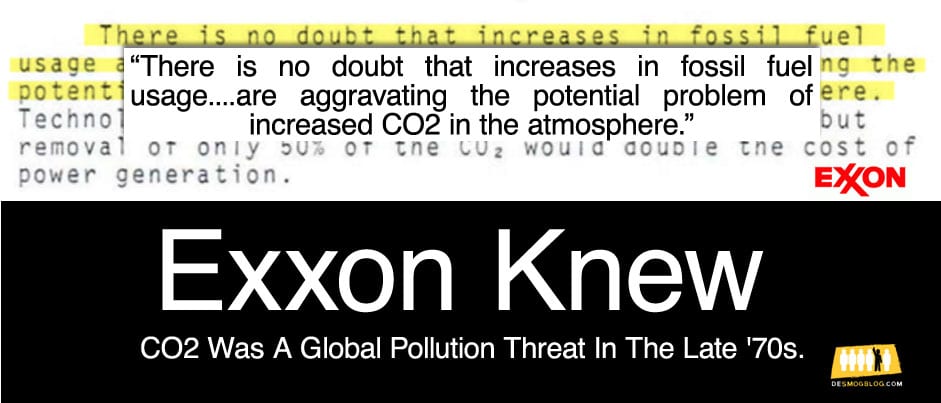
clearly
yes thats how we knowClimate has been going through periods of heating and cool for as long as we've known.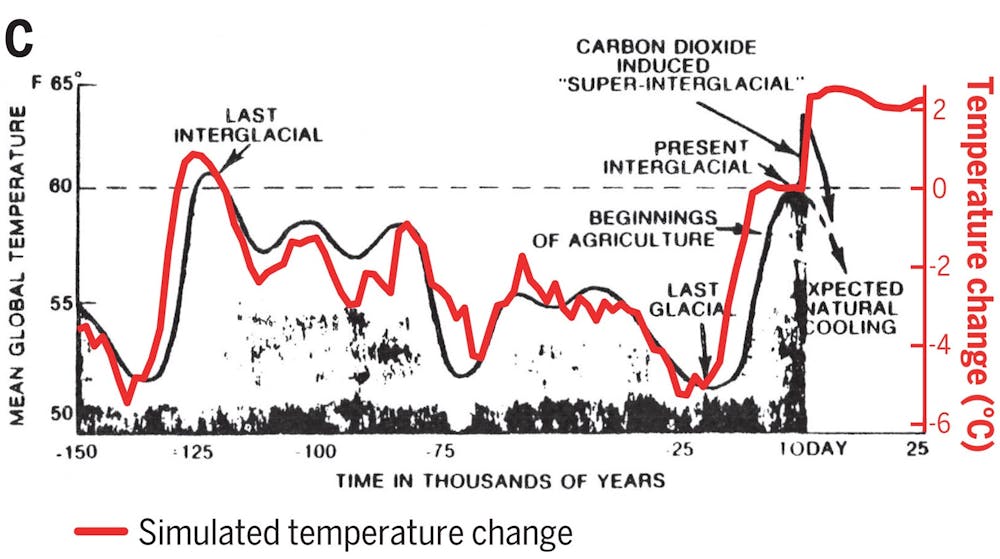 Last edited by H4D35 on 23:31:24 - 14/08/23 (2 years ago)
 -
-
Posted on 23:40:29 - 14/08/23 (2 years ago)Post link copied to clipboard Copy post link
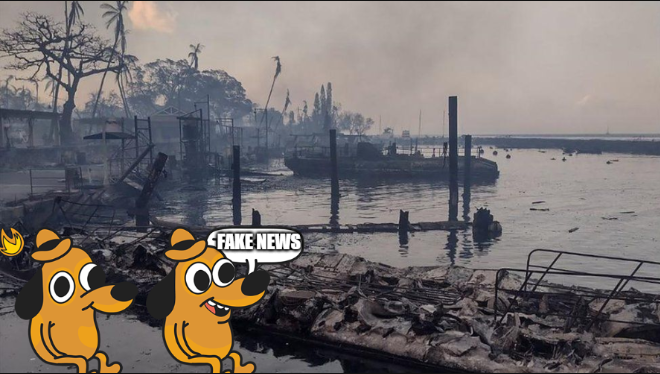 We are still at a historically cool point.
lol
you mean like exxon mobil?People like to skew facts to fit their narrative.
https://www.theguardian.com/business/2023/jan/12/exxon-climate-change-global-warming-research
thats literally what they did lmao
Oil company drove some of the leading science of the era only to publicly dismiss global heating
FaKe NeWs
also
how can evidence from the 70s thats provided by the oil company itself that it wanted to suppress be fake news exactly??Last edited by H4D35 on 23:47:21 - 14/08/23 (2 years ago) -
-
Posted on 08:29:02 - 15/08/23 (2 years ago)Post link copied to clipboard Copy post linklol
i'll give you 1 guess which side is spreading misinformation about climate change -

![Rodrick [1402437]](/images/honors/1371/h.png)

![shwibbing [575512]](/images/honors/169/h.png)

![Unlucky [2472585]](/images/honors/527/h.png)
![vengeance_torn [2191529]](/images/honors/611/h.png)

![Kajal [2542083]](/images/honors/827/h.png)
![angrysc0tsman12 [1099272]](/images/honors/210/h.png)

![Intricate [1957884]](/images/honors/65/h.png)


![H4D35 [1487001]](/images/honors/275/h.png)

![Madgod [1733719]](/images/honors/312/h.png)

